
Building wealth takes years of financial planning, but transferring those assets requires proper inheritance arrangements. Without a clear estate plan, your family might face delays in accessing savings, managing property, or settling outstanding financial obligations. Estate and legacy planning in Malaysia helps you organise your assets, identify beneficiaries, and establish suitable inheritance instructions. Understanding wills, trusts, inheritance laws, and financial nominations helps you make informed decisions about your family’s financial future.
What Is Estate and Legacy Planning in Malaysia?

Estate and legacy planning in Malaysia involves organising your assets, financial responsibilities, and inheritance instructions to support the transfer of wealth. Estate planning focuses on legal arrangements, including wills, trusts, beneficiary nominations, and estate administration. Legacy planning addresses broader financial objectives, including wealth preservation, family welfare, and business succession. Both approaches help you establish arrangements according to your financial goals and applicable inheritance laws.
What Is the Difference Between Estate Planning and Legacy Planning?
| Area | Estate Planning | Legacy Planning |
| Main focus | How eligible assets are distributed after death | How wealth supports the family across generations |
| Key question | Who receives the assets, and who manages the distribution? | How should inherited wealth support future family needs? |
| Common tools | Wills, beneficiary arrangements, and estate administration | Trusts, education funding, and longer-term family wealth planning |
| Example | A will names children as beneficiaries of a property. | An education trust provides funds for future studies. |
| Time horizon | Focuses mainly on the transfer of assets | Focuses on longer-term family goals and continuity |
Estate planning and legacy planning can work together. Estate planning addresses the transfer and administration of assets, while legacy planning considers how those assets may support future generations over time.
Why Estate and Legacy Planning Matters in Malaysia

Estate and legacy planning helps protect your family’s financial interests and reduces uncertainty during inheritance distribution. Without proper arrangements, beneficiaries might encounter administrative delays, disagreements over ownership, or difficulties accessing funds for daily expenses. Outstanding mortgages, education fees, and household commitments might continue while your family completes estate administration. Preparing appropriate instructions gives your beneficiaries clearer information about their financial responsibilities.
Consider a family home worth RM800,000 with an outstanding mortgage of RM300,000. Surviving family members need to manage the remaining financing alongside their living expenses and other financial commitments. Although Malaysia currently has no inheritance tax, beneficiaries still face estate administration procedures and potential expenses. Understanding the small estate administration requirements help families prepare suitable financial arrangements.
How Malaysian Inheritance Laws Affect Estate and Legacy Planning

Malaysia applies different inheritance requirements depending on religion, location, and asset ownership. These rules determine how eligible estate assets pass to beneficiaries and which administration procedures apply. Understanding the relevant legal framework helps you choose suitable planning instruments and prepare your inheritance instructions.
Estate Planning for Non Muslims in Malaysia
For non-Muslims in Peninsular Malaysia, the Wills Act 1959 governs the preparation of wills, while the Distribution Act 1958 generally governs the distribution of an estate when someone dies without a valid will. A valid will identifies beneficiaries and appoints an executor to administer the estate. The Wills Act generally requires written instructions, the testator’s signature, and two witnesses who meet the applicable requirements. Sabah and Sarawak have separate legal provisions governing certain inheritance matters.
Estate Planning for Muslims in Malaysia
Muslim estate planning follows applicable Syariah principles, including Faraid, which determines inheritance shares among eligible heirs. A wasiat generally allows a Muslim to bequeath up to one-third of the net estate to beneficiaries who are not entitled to inherit under faraid, subject to applicable Syariah requirements. A bequest exceeding one-third, or a bequest in favor of a faraid heir, generally requires the consent of the other eligible heirs after the testator’s death. Hibah provides another method of transferring selected assets through valid lifetime gifts under applicable Syariah requirements.
What Happens If You Die Without a Will in Malaysia?
Without a valid will, the relevant inheritance rules determine how eligible estate assets pass to beneficiaries. Non Muslim estates generally follow statutory intestacy rules, while Muslim estates follow applicable Islamic inheritance principles. Beneficiaries must also complete the relevant administrative procedures before transferring assets requiring formal distribution. In Peninsular Malaysia, qualifying small estates with a total value not exceeding RM5 million may be administered through the applicable small-estate procedures. These procedures cover movable assets, immovable assets, or a combination of both, subject to the relevant eligibility requirements. Different procedures may apply to estates involving a valid will or estates that do not qualify for small-estate administration.
Essential Tools for Estate and Legacy Planning in Malaysia
Different estate planning instruments serve different purposes based on your assets, family circumstances, and financial objectives. Selecting suitable arrangements, such as a person signing a will as part of estate planning helps you address inheritance distribution, beneficiary protection, and ongoing financial management.
Will Writing for Estate Planning in Malaysia

A will provides written instructions explaining how eligible estate assets should pass to beneficiaries after your death. Through a valid will, you appoint an executor to handle estate administration and identify your intended beneficiaries. Parents also use wills to express guardianship preferences for minor children. Understanding the difference between wills and trusts in Malaysia helps you assess which arrangements suit your family’s circumstances.
Trust Planning for Wealth Preservation
A trust allows an appointed trustee to manage designated assets for beneficiaries according to established terms. This arrangement supports families with young children, dependents with special needs, or beneficiaries requiring ongoing financial management. For example, an education trust might provide scheduled funding for tuition fees and living expenses. Learn how cash trusts support estate planning when considering financial arrangements for your beneficiaries.
Hibah and Wasiat for Muslim Estate Planning
Hibah and Wasiat serve different purposes within Muslim inheritance planning. Hibah involves transferring eligible assets during your lifetime, while Wasiat provides instructions concerning distribution after death. Each arrangement follows specific Syariah and legal requirements affecting its validity and implementation. Understanding these differences helps you coordinate your wealth distribution arrangements with Faraid’s requirements.
EPF and Insurance Nominations in Malaysia
EPF nominations establish who handles or receives your retirement savings after your passing. For Muslim members, nominees generally act as administrators responsible for distributing savings according to Islamic inheritance requirements. For non Muslim members, individual nominees generally receive the savings as beneficiaries. Review the official KWSP nomination requirements alongside your insurance or takaful terms because beneficiary rights depend on the relevant arrangements.
The 7 Steps of Estate and Legacy Planning in Malaysia
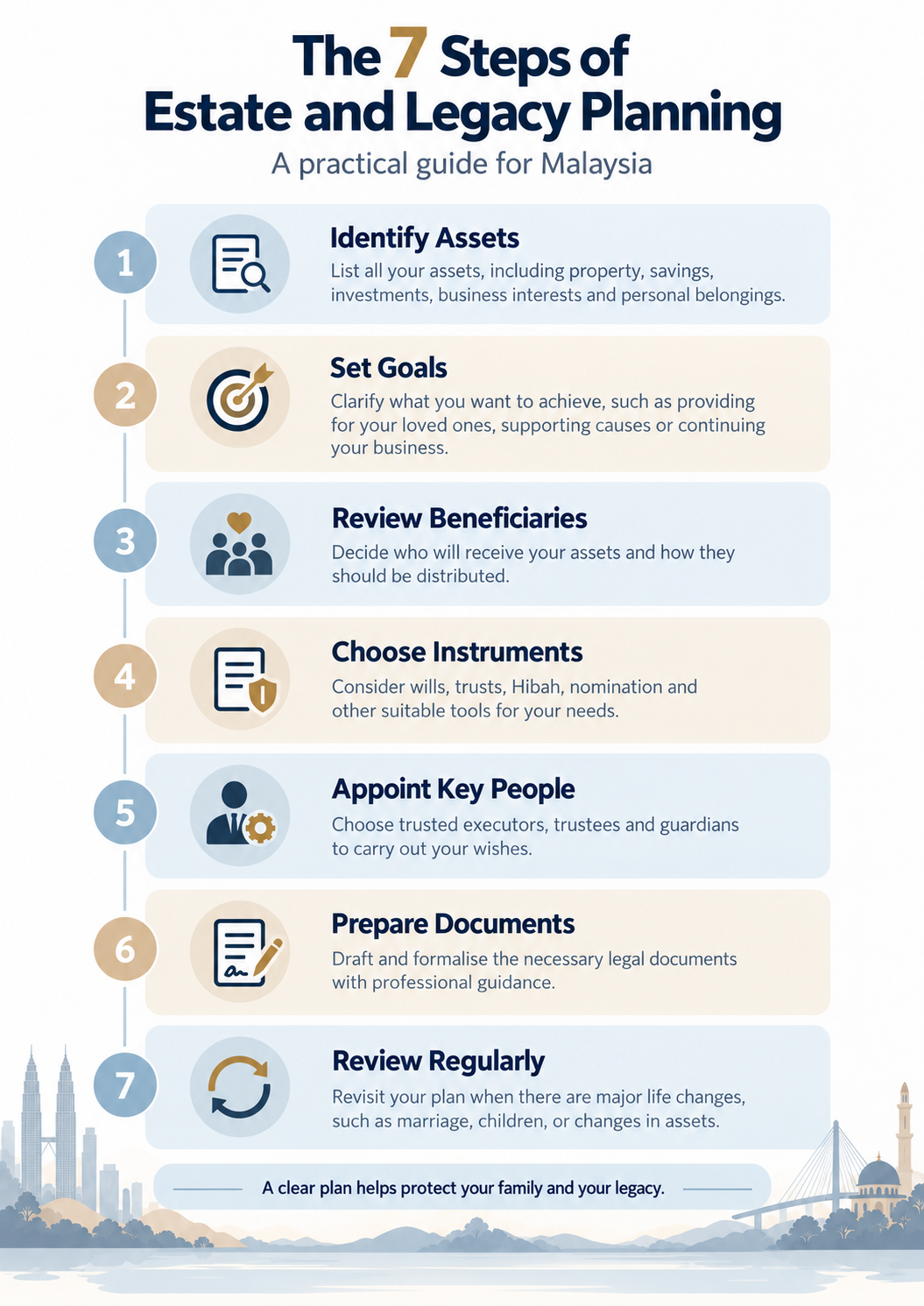
Estate and legacy planning in Malaysia involves identifying your assets, establishing inheritance goals, and preparing suitable arrangements. Following these seven steps helps you organise financial information and address your family’s future responsibilities.
1. Identify Your Assets and Financial Responsibilities
Begin by listing your properties, bank savings, investments, EPF contributions, insurance policies, and business interests. Record outstanding mortgages, personal loans, and other liabilities because these obligations affect the value of your estate. Include ownership information for jointly held assets and identify where supporting documents are stored. A complete inventory helps your executor identify financial institutions and understand your estate’s responsibilities.
2. Establish Your Wealth Distribution and Legacy Goals
Determine how you want your wealth to support your family and future financial responsibilities. Your objectives might include children’s education, elderly parents’ living expenses, charitable contributions, or business continuity. Consider both immediate financial needs and the longer-term management of inherited assets. Reviewing your retirement planning in Malaysia alongside inheritance objectives helps connect your lifetime financial priorities with future distribution arrangements.
3. Identify Beneficiaries and Review Inheritance Rights
Identify your intended beneficiaries and consider their financial circumstances before preparing distribution instructions. Review the needs of your spouse, children, parents, and dependents who require additional financial support. Muslim families should consider Faraid entitlements, while non-Muslim families should review applicable inheritance rules. Check existing beneficiary nominations to identify inconsistencies between your financial accounts and estate documents.
4. Choose Suitable Estate Planning Instruments
Select planning instruments according to your financial position, beneficiary needs, and distribution objectives. A will provides inheritance instructions, while a trust supports the management of designated assets for beneficiaries. Hibah, wasiat, insurance, and takaful serve different purposes according to their legal requirements. Understanding the available arrangements helps you make informed decisions about asset distribution and financial protection.
5. Appoint Executors, Trustees, and Guardians
Choose responsible individuals to manage your estate and carry out the instructions in your documents. An executor handles estate administration, while a trustee manages trust assets according to the trust terms. Parents should also consider suitable guardianship arrangements for minor children. Discuss these responsibilities with your preferred appointees and assess their availability, financial understanding, and willingness to accept their roles.
6. Prepare and Organise Your Estate Planning Documents
Prepare your legal documents with qualified professionals to ensure your instructions follow applicable Malaysian requirements. Organise your will, trust agreements, property records, insurance information, and financial account details in secure locations. Inform your executor where to find the original documents and maintain an inventory of relevant institutions. Accessible records help your beneficiaries identify assets and complete the appropriate administration procedures.
7. Review and Update Your Estate Plan Regularly
Review your estate plan following major life events such as marriage, divorce, childbirth, property purchases, or business expansion. Changes in beneficiaries, financial responsibilities, or asset ownership might affect your original instructions. Consider reviewing your arrangements every few years and whenever significant personal circumstances change. Regular reviews help maintain consistency between your estate documents and current financial objectives.
Common Estate and Legacy Planning Mistakes to Avoid
Delaying estate planning creates difficulties when beneficiaries need to identify assets and complete inheritance procedures. Other common mistakes include outdated nominations, missing ownership documents, and insufficient accessible funds for household expenses. Business owners should also establish succession arrangements because transferring company shares does not automatically determine future management responsibilities. Understanding common retirement planning mistakes helps you review financial decisions affecting your estate and dependents.
How HWG Asia Supports Estate and Legacy Planning in Malaysia

HWG Asia provides estate and retirement planning services covering wealth preservation, asset distribution, and family financial security. Through its subsidiaries and professional collaborators, HWG Asia supports arrangements involving will execution, estate administration, trust execution, and custodial services. Available trust solutions include education trusts, cash trusts, retirement trusts, and arrangements addressing specific beneficiary needs. These services help individuals and families assess their inheritance objectives alongside broader financial responsibilities.
Explore HWG Asia’s estate and retirement planning services to understand the available solutions and discuss your estate and legacy planning objectives.
Frequently Asked Questions About Estate and Legacy Planning in Malaysia
Q1: What is estate planning in Malaysia?
Estate planning in Malaysia involves organising assets, beneficiaries, and legal instructions for managing and distributing wealth after death. Common instruments include wills, trusts, hibah, and beneficiary nominations. The applicable inheritance requirements depend on religion, ownership arrangements, and relevant Malaysian laws.
Q2: What are the 7 steps in the estate planning process?
The seven steps involve identifying assets and liabilities, establishing legacy goals, reviewing beneficiaries, choosing planning instruments, appointing responsible individuals, preparing legal documents, and reviewing arrangements regularly. Following these steps helps organise inheritance instructions and address family financial responsibilities. Professional guidance supports compliance with applicable legal requirements.
Q3: What are the two most important purposes of estate planning?
The two main purposes are protecting your beneficiaries’ financial interests and ensuring assets follow valid inheritance instructions and applicable laws. Appropriate arrangements help reduce administrative uncertainty and potential inheritance disagreements. Financial planning also supports dependents who rely on your income and assets.
Q4: What does legacy planning mean?
Legacy planning involves preparing for the transfer and management of wealth, financial responsibilities, and personal values across generations. The process considers family financial security, wealth preservation, charitable contributions, and business succession. Legacy planning complements estate planning by addressing longer term family objectives.
Q5: What happens if you die without a will in Malaysia?
Without a valid will, applicable inheritance laws determine the distribution of eligible estate assets. Non Muslim estates generally follow statutory intestacy rules, while Muslim estates follow applicable Islamic inheritance principles, including Faraid. Beneficiaries must complete the relevant estate administration procedures before receiving assets requiring formal distribution.
Learn More About Estate and Legacy Planning with HWG Asia
Estate and legacy planning starts with understanding your assets, beneficiaries, inheritance arrangements and family responsibilities. Continue exploring HWG Asia’s educational resources on wills, trusts, succession, retirement and generational wealth to build a clearer understanding of how these areas may connect.
Take the Next Step
Contact HWG Malaysia Today
Got Inquiries? Please contact us or start a Conversation with HWG Greenie, our AI chatbot.
Visit and follow Our Social Media:
Website: https://www.hwg.asia/
Facebook: https://www.facebook.com/hwg.asia
LinkedIn: https://www.linkedin.com/company/hwgasia/
Visit Our Office:
Address: 42, Jalan BM1/2, Taman Bukit Mayang Emas, 47301 Petaling Jaya, Selangor
Email: customerservice@hwg.asia
Phone: 03-5569 9834
Download the HWG Go Apps (Available on the Play Store and App Store)

HWG Go: Available on both the Google Play Store and Apple App Store (T&C Available)
Disclaimer:
This article, published on this website, may be written or contributed by subject-matter experts or external writers. They are intended for general information and educational purposes only. HWG does not guarantee the accuracy, completeness, or timeliness of the information provided. Please note that the products, services or solutions in these articles may not be offered or provided by HWG. HWG shall not be held responsible or liable for any loss, damage, or issues arising from the use of, or reliance on such information.