

Managing money can feel overwhelming when you are trying to understand budgeting, savings, debt, investments, insurance and retirement planning all at the same time. That is why learning the basics of financial education in Malaysia can help you make more financial decisions. The good news is that you do not need to become a financial expert overnight. There are free and accessible financial education resources in Malaysia that can help you learn step by step.
What Is Financial Education in Malaysia?

Financial education refers to learning the knowledge and skills needed to manage one’s finances and make informed financial decisions. It covers everyday areas such as budgeting and saving, as well as longer-term topics including debt management, insurance, investments and retirement planning.
For Malaysians, financial education can also involve understanding local financial systems and products such as Kumpulan Wang Simpanan Pekerja (Employees Provident Fund), KWSP contributions, income tax, credit facilities, insurance or takaful and regulated investment products. Malaysia’s Financial Education Network (FEN) recognises financial literacy as an important part of building financial resilience and helping Malaysians navigate increasingly complex financial choices.
For beginners, financial education should not start with complicated investment strategies. Instead, it should begin with understanding your current financial situation by including how much you earn, where your money goes, how much you save and what debts you have. Once these foundations are clear, you can gradually move towards more advanced areas such as investing and retirement planning.
Where Should You Start Learning Financial Literacy in Malaysia?

The easiest way to learn financial literacy in Malaysia is to follow a step-by-step approach rather than trying to learn everything at once. Start with cash-flow management, budgeting, savings and debt management. Once you understand these fundamentals, you can gradually explore financial protection, investing, tax and retirement planning. You can also use free educational resources from organisations such as KWSP, AKPK, FEN and MFPC to build your financial knowledge.
1. Understand Your Cash Flow
Cash-flow management is one of the first areas to learn because it shows how money moves in and out of your personal finances. Start by recording your monthly income and expenses, separating essential spending such as food, housing and transportation from optional spending such as entertainment and shopping.
This gives you a clearer picture of whether your current income can support your spending, savings and financial commitments. Tracking your cash flow can also help you identify unnecessary spending and areas where you may be able to save more.
2. Create a Realistic Personal Budget
Once you understand your cash flow, the next step is to create a budget that reflects your actual financial situation. A budget can help you decide how much to allocate towards necessities, savings, debt repayments and personal spending each month.
Rather than following one budgeting formula strictly, adjust your spending plan according to your income, commitments, lifestyle and financial goals, as the purpose of a budget is to give you greater control over your money rather than creating an unrealistic spending limit that is difficult to maintain.
3. Build an Emergency Fund
An emergency fund provides money that can be used for unexpected expenses such as urgent repairs, medical costs or temporary loss of income; the amount you need depends on factors such as your monthly expenses, job stability and financial responsibilities.
Instead of waiting until you can save a large amount, start with a manageable target and build it consistently over time. Keeping emergency savings separate from everyday spending can also make it easier to avoid using the money for non-essential purchases.
4. Learn About Debt and Credit
Understanding debt is another important part of financial education in Malaysia, particularly if you use credit cards, personal loans, hire-purchase financing, or other forms of borrowing. Begin by learning how interest or profit charges work, what happens when you only make minimum payments and how different types of debt affect your overall finances.
It is also useful to understand your credit commitments before taking on new borrowing. Malaysians who need help understanding their financial situation can explore educational and counselling resources provided by AKPK.
5. Understand Interest, Inflation and Compounding
Financial concepts such as compound interest and inflation may seem complicated at first, but understanding them can improve everyday financial decision-making. Compound growth explains how returns can build upon previous returns, while inflation affects the purchasing power of money over time and learning these concepts before making major savings or investment decisions can help you understand both potential benefits and risks. It can also help you recognise why starting to save and plan for long-term financial goals early can be useful.
Financial Education Resources Malaysia: Where Can You Learn?
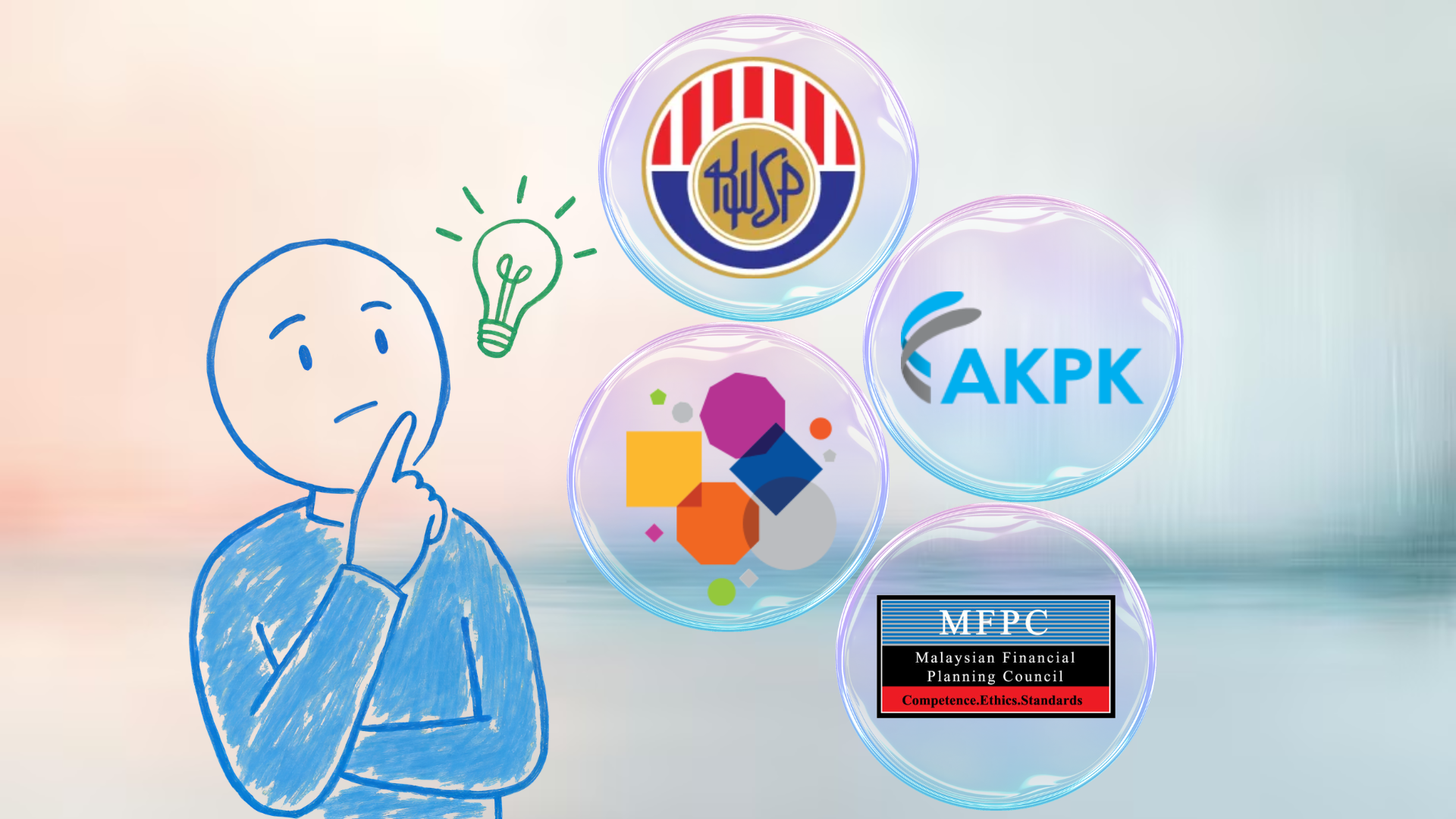
There are several established financial education resources in Malaysia, so beginners do not necessarily need to pay for a course to get started. Government-linked institutions, financial organisations and professional bodies provide educational materials covering different areas of personal finance. Choosing resources from established organisations can also help readers distinguish educational information from unverified financial advice online.
KWSP Financial Literacy Hub
The KWSP Financial Literacy Hub (FinLit Hub) is one useful place to start. Its online resources currently include articles, videos, podcasts, infographics and e-learning materials covering areas such as budgeting, savings, investment, debt management and retirement.
KWSP also introduced its Financial Literacy e-Learning Module in May 2026, which is open to the public and provides self-paced learning. The current modules cover cash-flow management, risk management in financial planning, inflation, credit management, compound interest and retirement planning, with an e-Certificate of Participation available for completed modules.
AKPK
Agensi Kaunseling dan Pengurusan Kredit (AKPK) is another important resource for Malaysians who want to improve their financial knowledge, particularly in areas involving budgeting, credit and debt management. Its financial education initiatives include programmes designed around different financial situations and life stages.
AKPK is especially relevant for people who are already experiencing difficulties with debt or want to better understand their financial commitments. Learning about debt before taking on new financial commitments can be an important part of responsible money management.
Financial Education Network (FEN)
The Financial Education Network is an inter-agency platform jointly chaired by Bank Negara Malaysia and the Securities Commission Malaysia. Its members include organisations such as the Ministry of Education Malaysia, Ministry of Higher Education, AKPK, KWSP, Malaysia Deposit Insurance Corporation and Permodalan Nasional Berhad.
FEN also coordinates Malaysia’s national financial literacy initiatives with its National Strategy for Financial Literacy 2026–2030, which highlights the importance of strengthening financial resilience and helping Malaysians navigate increasingly complex financial choices, including digital payments, investments, debt and retirement planning.
MFPC My Money & Me
The Malaysian Financial Planning Council (MFPC) also provides financial literacy education through My Money & Me. Its self-paced learning platform provides access to materials covering areas such as asset accumulation, asset management, asset distribution and asset protection, alongside educational resources from organisations including AKPK, KWSP, Bank Negara Malaysia and the Securities Commission.
For someone looking for structured financial education resources in Malaysia, this can provide another learning pathway beyond basic budgeting. MFPC also offers financial literacy workshops and professional financial-planning programmes for people interested in developing their knowledge further.
What Should You Learn After the Basics?

Once you understand budgeting, savings and debt, you can start exploring financial protection and wealth-building. Financial planning is interconnected, so decisions in one area can affect other parts of your financial situation.
Learn About Insurance and Takaful
Insurance and takaful can help provide financial protection against certain unexpected events. Before purchasing a policy or plan, learn about the type of coverage provided, exclusions, premiums or contributions, policy terms and the level of protection you may actually need.
The aim is to understand how financial protection fits into your overall financial plan rather than purchasing a product simply because it is recommended to you.
Learn the Basics of Investing.
Investing is another area to explore once your basic financial foundations are in place; learn about risk and return, diversification, investment fees, liquidity, and your investment time horizon.
It is also important to understand that investments carry different levels of risk and that past performance does not guarantee future results. Verify information about financial products and providers through appropriate Malaysian regulatory or official resources rather than relying solely on social media recommendations.
Learn About Tax and Retirement Planning
Malaysians can learn a lot about matters such as income tax, KWSP contributions, retirement saving options and how different financial decisions may affect their long-term goals. Retirement planning does not have to begin close to retirement age.
Understanding your long-term financial goals earlier can give you more time to build savings and review your financial priorities as your income and responsibilities change.
Learn How to Spot Financial Scams
Financial literacy also means knowing how to identify potentially risky or fraudulent financial offers. Always be cautious of investment opportunities that promise guaranteed returns, unusually high profits or very low risk, particularly when you are pressured to transfer money quickly.
You should also verify financial companies, investment opportunities and financial claims through appropriate official or regulatory sources before making a decision. Learning how common financial scams work can be just as important as learning how to save or invest.
Do You Need a Financial Education Course?

Not necessarily. If your goal is to improve your personal money-management skills, you can begin with free financial education resources in Malaysia from organisations such as KWSP, AKPK, FEN and MFPC. A formal course or professional qualification may be more relevant if you want structured training, deeper financial-planning knowledge or are considering a career in the financial planning industry.
The most important thing is to start with reliable information and apply the concepts gradually as financial literacy is an ongoing skill rather than something that can be completed in one course or workshop.
Frequently Asked Questions About Financial Education in Malaysia
Q1: Where should I start when learning financial literacy?
A: Start with the fundamentals: understand your cash flow, create a realistic budget, build savings and learn how debt and credit work. Once you are comfortable with these areas, progress to insurance or takaful, investing, tax and retirement planning. Malaysians can begin with free resources such as the KWSP FinLit Hub, AKPK, FEN and MFPC’s My Money & Me.
Q2: Where can I learn financial education in Malaysia?
A: You can start with established financial education resources in Malaysia, including KWSP’s FinLit Hub, AKPK, FEN and MFPC’s My Money & Me. These platforms provide educational materials covering topics such as cash flow, budgeting, credit, debt, investment, financial planning and retirement.
Q3: How much does a CFP course cost in Malaysia?
A; The cost of a Certified Financial Planner (CFP) programme in Malaysia can vary depending on the education provider, programme pathway and applicable examination or other fees. Anyone considering the qualification should check the latest fees and requirements directly with the Financial Planning Association of Malaysia (FPAM) and its approved education providers.
Q4: What is the best way to improve financial literacy?
A: The best approach is to learn gradually and apply each concept to your own financial situation. Start with cash flow, budgeting, savings and debt before moving into financial protection, investing, tax and retirement planning. Using reliable resources from established Malaysian organisations can also help you avoid relying on unverified financial advice online.
Start Learning Financial Literacy One Step at a Time
Learning about money does not require you to understand every financial product from the beginning. Start with your own cash flow, build a practical budget, understand debt and savings, and gradually progress towards investments, protection and retirement planning. With accessible financial education resources in Malaysia from established organisations, you can build your financial knowledge at your own pace and make more informed decisions as your financial needs change.
Build a Wealth Management Plan Aligned with Your Life Goals
Gain clearer direction, coordinated support, and access to suitable wealth planning with HWG.
HWG supports individuals and families across key financial needs, including:
• Wealth planning accumulation
• Estate planning
• Retirement planning
Where regulated advice or execution is required, services are delivered by appropriately licensed entities within the HWG group. HWG does not provide regulated financial advice or execute investments.
Take the Next Step
Contact HWG Malaysia Today
Got Inquiries? Please contact us or start a Conversation with HWG Greenie, our AI chatbot.
Visit and follow Our Social Media:
Website: https://www.hwg.asia/
Facebook: https://www.facebook.com/hwg.asia
LinkedIn: https://www.linkedin.com/company/hwgasia/
Visit Our Office:
Address: 42, Jalan BM1/2, Taman Bukit Mayang Emas, 47301 Petaling Jaya, Selangor
Email: customerservice@hwg.asia
Phone: 03-5569 9834
Download the HWG Go Apps (Available on the Play Store and App Store)

HWG Go: Available on both the Google Play Store and Apple App Store (T&C Available).
Disclaimer:
This article, published on this website, may be written or contributed by subject-matter experts or external writers. They are intended for general information and educational purposes only. HWG does not guarantee the accuracy, completeness, or timeliness of the information provided. Please note that the products, services or solutions in these articles may not be offered or provided by HWG. HWG shall not be held responsible or liable for any loss, damage, or issues arising from the use of, or reliance on such information.